There’s a moment that happens to almost everyone on their first drive into Banff. You’ve been on the Trans-Canada Highway for a while, the land has been opening up around you, and then the Rocky Mountains appear — not gradually, not subtly, but all at once, filling your entire windshield with something that doesn’t quite look real. Jagged limestone peaks, glaciers tucked into high ridges, rivers the colour of turquoise glass. It’s the kind of scenery that makes people pull over just to stand there for a minute.
Banff is Canada’s first national park, established in 1885, and the town at its centre has grown into one of the most visited destinations in the country while somehow managing to stay genuinely small and charming. Here’s everything you need to know to plan your visit well.
Understanding Banff: Park vs Town
One thing to clarify before you plan: “Banff” refers to two overlapping things — Banff National Park, a 6,641 square kilometre UNESCO World Heritage Site, and Banff townsite, the small mountain town (population around 8,000) that sits within the park and serves as the base for most visitors.
The national park entrance requires a Parks Canada pass — around $11 CAD per person per day or $23 per vehicle per day in 2026 (or included with an annual Discovery Pass, worth buying if you’re spending more than a few days or plan to visit other national parks that year). The town itself is free to walk around, and most of the restaurants, shops, and accommodation are within it.
Almost everything you’ll want to see is within 90 minutes of the townsite, and most visitors use Banff as their base for exploring the wider park.
Banff Avenue: The Town Itself
Banff Avenue is the main street, and it’s worth at least a full morning of wandering before you drive out to the lakes and trails. Colourful storefronts, independent gear shops, cafés, and restaurants line both sides with the mountains rising directly at the end of the street — a view that never gets old no matter how many times you’ve seen it.
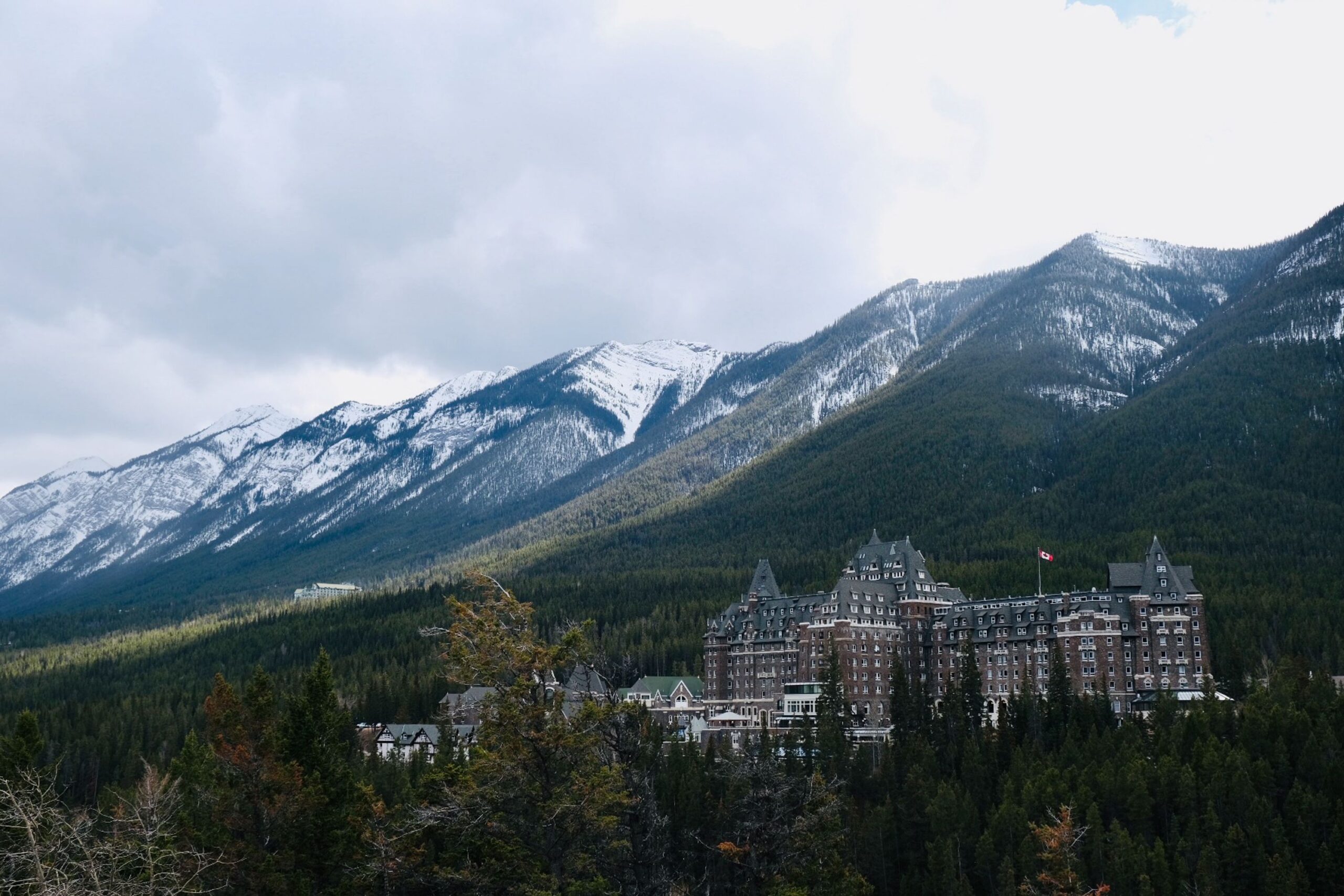
Don’t leave without trying the fudge at the Fudgery (you’ll smell it from half a block away) or at least walking through the Banff Springs area to see the Fairmont Banff Springs Hotel — a 1888 Scottish Baronial castle set against the mountains that has to be one of the most dramatic hotels in Canada.
Bow Falls, a short walk from the townsite, is an easy, free stop — a wide rushing falls on the Bow River with the Fairmont visible on the hill above it, and one of the most-photographed scenes in Banff.
Banff Gondola: The Essential Overview
The Banff Gondola carries you 698 vertical metres to the summit of Sulphur Mountain in eight minutes, emerging onto a ridgeline boardwalk with 360-degree views of six mountain ranges. On a clear day, this is one of the most spectacular panoramas you’ll find anywhere in Canada.
The summit has an interpretive centre, two restaurants, and a rooftop observation deck. The gondola itself costs around $65–80 CAD per adult depending on the season (book online in advance — it’s almost always cheaper than walk-up pricing). Budget about two to three hours for the experience.
If you’re feeling ambitious, you can also hike up Sulphur Mountain on a marked trail (about 5.5 km, 655m elevation gain) and take the gondola back down — a popular option that feels very satisfying.
Wondering what to do in Banff during your first trip? Start with a mix of iconic lakes, mountain viewpoints, easy walks, cultural attractions and time in Banff town.
1. Walk Along Banff Avenue
Banff Avenue is the centre of town and an excellent first stop. Browse local stores, outdoor retailers and galleries while enjoying uninterrupted views of Cascade Mountain.
The street is close to restaurants, museums, the Bow River and several easy walking routes, so you can explore much of Banff town without needing a car.
2. Ride the Banff Gondola
The Banff Gondola travels to the summit of Sulphur Mountain, where panoramic viewpoints overlook the Bow Valley and surrounding ranges. Follow the boardwalk to Sanson’s Peak and explore the indoor interpretive centre before returning to town.
3. Relax at Banff Upper Hot Springs
After a day of hiking or sightseeing, soak in the warm mineral pool at Banff Upper Hot Springs. The attraction is close to the gondola, making the two experiences easy to combine.
4. Visit Lake Louise
Walk along the lakeshore, rent a canoe or choose a nearby hiking trail. Lake Agnes Tea House is a popular moderate hike, while the lakeshore path offers a gentler alternative.
Lake Louise is extremely busy in summer, so plan transportation in advance instead of depending on lakeside parking.
5. See Moraine Lake
Moraine Lake is one of the most photographed Banff attractions. Walk up the Rockpile Trail for the classic Valley of the Ten Peaks view, or explore one of the nearby trails when conditions permit.
Private vehicles are not allowed on Moraine Lake Road during the visitor season. Reserve a shuttle, transit ticket or approved tour.
6. Hike Johnston Canyon
Follow catwalks through a narrow limestone canyon to the Lower and Upper Falls. Johnston Canyon is popular throughout the year and becomes especially dramatic when the waterfalls freeze in winter.
7. Explore Lake Minnewanka
Drive or take transit to Lake Minnewanka for lakeside walks, picnics and boat cruises. Continue around the scenic loop to Two Jack Lake and Cascade Ponds.
8. Photograph Bow Falls
Bow Falls is one of the easiest natural attractions to reach from Banff town. Walk along the river from Central Park or visit the viewpoint near the Fairmont Banff Springs.
9. Visit Surprise Corner
Surprise Corner provides a classic view of the Fairmont Banff Springs framed by the Bow River and surrounding forest. It is a quick photography stop that can be combined with Bow Falls.
10. Hike Tunnel Mountain
Tunnel Mountain is a manageable summit hike close to downtown. From the top, hikers can see Banff town, Mount Rundle, the Bow River and the surrounding valley.
11. Discover Cave and Basin
Learn how natural hot springs contributed to the creation of Banff National Park and Canada’s national park system. Indoor exhibits and outdoor boardwalks make it a useful activity when the weather is uncertain.
12. Walk Through Cascade of Time Garden
Located near the south end of Banff Avenue, Cascade of Time Garden features landscaped flowerbeds, ponds, pathways and mountain views. Entry is free, and the garden is an easy addition to a downtown walking itinerary.
13. Visit the Banff Park Museum
This historic museum displays preserved natural-history specimens in a distinctive log building. It offers insight into how visitors and scientists understood the park’s wildlife during Banff’s early years.
14. Take a Scenic Drive
The Bow Valley Parkway offers viewpoints, picnic areas, trail access and opportunities to appreciate the landscape at a slower pace. The Icefields Parkway begins near Lake Louise and continues north toward Jasper through some of Canada’s most dramatic scenery.
Always check for seasonal restrictions, construction and wildlife-related closures before departing.
15. Eat in Downtown Banff
End the day at one of Banff’s restaurants, breweries, cafés or pubs. Options range from affordable pizza and burgers to fondue, Alberta beef and upscale Canadian cuisine.
Things to Do in Banff Town Without a Car
You do not need a vehicle to enjoy Banff town. The compact townsite is easy to explore on foot, and public transit connects several major attractions.
Car-free activities include:
- Walking along Banff Avenue
- Visiting Central Park and the Bow River
- Exploring Cascade of Time Garden
- Visiting Banff Park Museum
- Touring the Whyte Museum
- Walking to Bow Falls
- Hiking Tunnel Mountain
- Taking transit to the gondola and hot springs
- Dining at downtown Banff restaurants
- Shopping for locally made products and outdoor gear
Staying without a car can also reduce parking costs and summer traffic stress.
Free Things to Do in Banff
Although many tours and headline attractions require tickets, several enjoyable Banff activities are free after national-park admission:
- Walk along Banff Avenue
- Visit Bow Falls
- Explore Cascade of Time Garden
- Hike Tunnel Mountain
- Walk the Fenland Trail
- Relax at Cascade Ponds
- Visit the viewpoints at Surprise Corner
- Walk beside the Bow River
- Explore the Lake Louise lakeshore
- Photograph Vermilion Lakes
Pack a picnic and use public transit to create an affordable day of Banff sightseeing.
Banff Sightseeing for Families
Families can balance outdoor adventures with short, accessible attractions. The Banff Gondola, Bow Falls, Lake Minnewanka, Cascade Ponds and Cave and Basin are suitable choices for many age groups.
Younger children may enjoy easy riverside walks, picnics and the interpretive displays at cultural attractions. Older children and teenagers may prefer hiking, rafting, canoeing, skiing or wildlife tours.
Always check height, age and health restrictions before booking commercial activities.
What to Do in Banff When It Rains
Mountain weather changes quickly, but rain does not need to cancel the day. Consider:
- Whyte Museum of the Canadian Rockies
- Banff Park Museum
- Cave and Basin exhibits
- Banff Upper Hot Springs
- Shopping and cafés on Banff Avenue
- A scenic meal with mountain views
- Indoor exhibits at the Banff Gondola summit
Carry a waterproof layer because clearer weather may return later in the day.
Suggested Banff Itineraries
One Day in Banff
Begin with Banff Avenue, visit Bow Falls, ride the Banff Gondola and finish with the hot springs or dinner downtown.
Two Days in Banff
Use the first day for Banff town, Sulphur Mountain and Bow Falls. Spend the second day visiting Lake Louise and Moraine Lake using reserved transportation.
Three Days in Banff
Add Johnston Canyon, Lake Minnewanka or a scenic drive on the Bow Valley Parkway to the two-day itinerary.
Five Days in Banff
Include longer hikes, a trip along part of the Icefields Parkway, a wildlife tour, canoeing, rafting or a full day in the Lake Louise area.
Frequently Asked Questions About Things to Do in Banff
What are the best things to do in Banff, Canada?
The most popular experiences include Lake Louise, Moraine Lake, the Banff Gondola, Banff Upper Hot Springs, Johnston Canyon, Lake Minnewanka and exploring Banff Avenue.
What can you do in Banff town?
In Banff town, visitors can shop and dine along Banff Avenue, visit museums, walk beside the Bow River, hike Tunnel Mountain, see Bow Falls and explore Cascade of Time Garden.
How many days do you need in Banff?
Three to five days gives most first-time visitors enough time to experience Banff town, Lake Louise, Moraine Lake, Johnston Canyon and several scenic viewpoints.
Can you visit Banff without a car?
Yes. Banff town is walkable, and public transit or shuttle services connect the town with attractions including Lake Louise, Moraine Lake, the gondola and hot springs.
What are the best Banff activities in winter?
Popular winter activities include skiing, snowboarding, snowshoeing, skating, ice walks, sleigh rides, sightseeing and soaking in Banff Upper Hot Springs.
Do you need to reserve Banff attractions?
Reservations are strongly recommended for popular commercial attractions, hotels and restaurants. Advance transportation reservations are particularly important for Lake Louise and Moraine Lake.