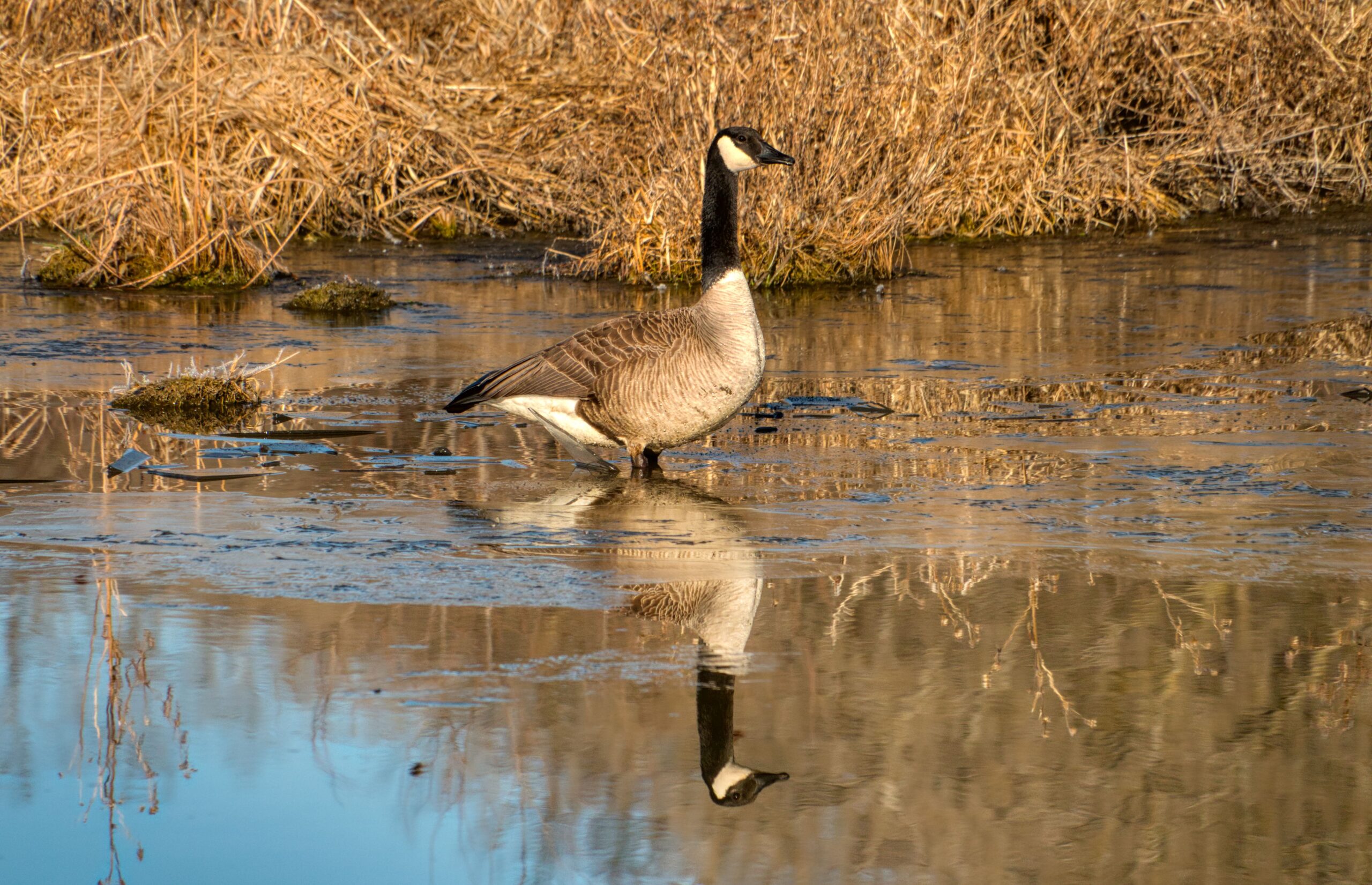
There’s a specific kind of silence that exists in Rattray Marsh Conservation Area that you wouldn’t expect to find in the middle of Mississauga. The boardwalk takes you above the wetland floor, the city recedes behind the tree canopy, and the sounds become: wind over the lake, red-winged blackbirds in the reeds, the occasional great blue heron lifting off from the shore. It’s one of the best natural places in the GTA, and the fact that it’s free, year-round, and accessible off a suburban parking lot still surprises people who discover it.
Rattray Marsh is the last remaining natural lakefront marsh on the western end of Lake Ontario. That distinction matters — it was officially recognized internationally in an Important Biological Program in 1969, and has since been designated an Area of Natural and Scientific Interest, an Environmentally Significant Area, and a Provincially Significant Wetland. It sits at 94 acres of total protected ground: cobble beach, wetland, shingle bar, field, and woodland, all managed by Credit Valley Conservation.
The shingle bar at its core is a geological feature unique in the region. Thousands of years ago, rocks formed a natural barrier between Lake Ontario and Sheridan Creek, slowing water flow and allowing nutrients to settle at the wetland’s bottom. That barrier — known as a “baymouth bar” or shingle bar — continues to form and collapse in cycles driven by weather and lake levels. Rattray Marsh was literally born from this geology, and the visible evidence of it at the lake’s edge is one of the things that makes this place feel genuinely ancient in a way that few spots within urban Ontario do.
For birdwatchers, Rattray Marsh is an exceptional site. The wetlands provide diverse habitat for over 200 species of birds — some migratory, some year-round residents. From the boardwalk and Knoll Trail, you might encounter great blue herons, black-crowned night herons, great egrets, common terns, and sandpipers at the water’s edge; red-winged blackbirds and marsh wrens in the reeds; American bitterns in the deeper marsh; and wood ducks drifting along Sheridan Creek. Through the forest trails, blue jays, chickadees, warblers, and woodpeckers are common. Otters have been spotted on the Knoll Trail section. Spring and fall migration seasons are the richest times for bird variety, though even a winter visit turns up active birdlife.
The Knoll Trail is a boardwalk loop off the main Pedestrian Waterfront Trail, passing through sensitive plant species and offering the best viewing angles of the marsh interior — some of the largest trees in the park grow along this section. The main boardwalk is stroller-friendly and accessible, with leashed dogs permitted throughout. Cycling is not permitted anywhere within Rattray Marsh, which keeps the trails quieter than most parks.
A note on access and parking: most visitors arrive via Jack Darling Memorial Park to the east, using its multiple free parking lots and walking west along the Waterfront Trail to the marsh entrance. Rattray Marsh’s own parking is extremely limited — the park itself does not have a large dedicated lot, and parking on surrounding streets (Bexhill Road, Meadow Wood Road) is not permitted and is enforced. Jack Darling’s lots are the practical answer. Park there, walk the waterfront path west, and the marsh entrance opens up on your right.
No washrooms within Rattray Marsh itself — use the year-round washrooms at Jack Darling Memorial Park before entering. No admission fee at any time. Open from after sunrise to before sunset daily, year-round, including winter — and the raised boardwalks make Rattray one of the better year-round trails in Mississauga because you avoid the spring mud that plagues ground-level trails.
Best visited: spring and fall for migration; summer mornings before the heat; winter for solitude and bare-branch views of the marsh structure.