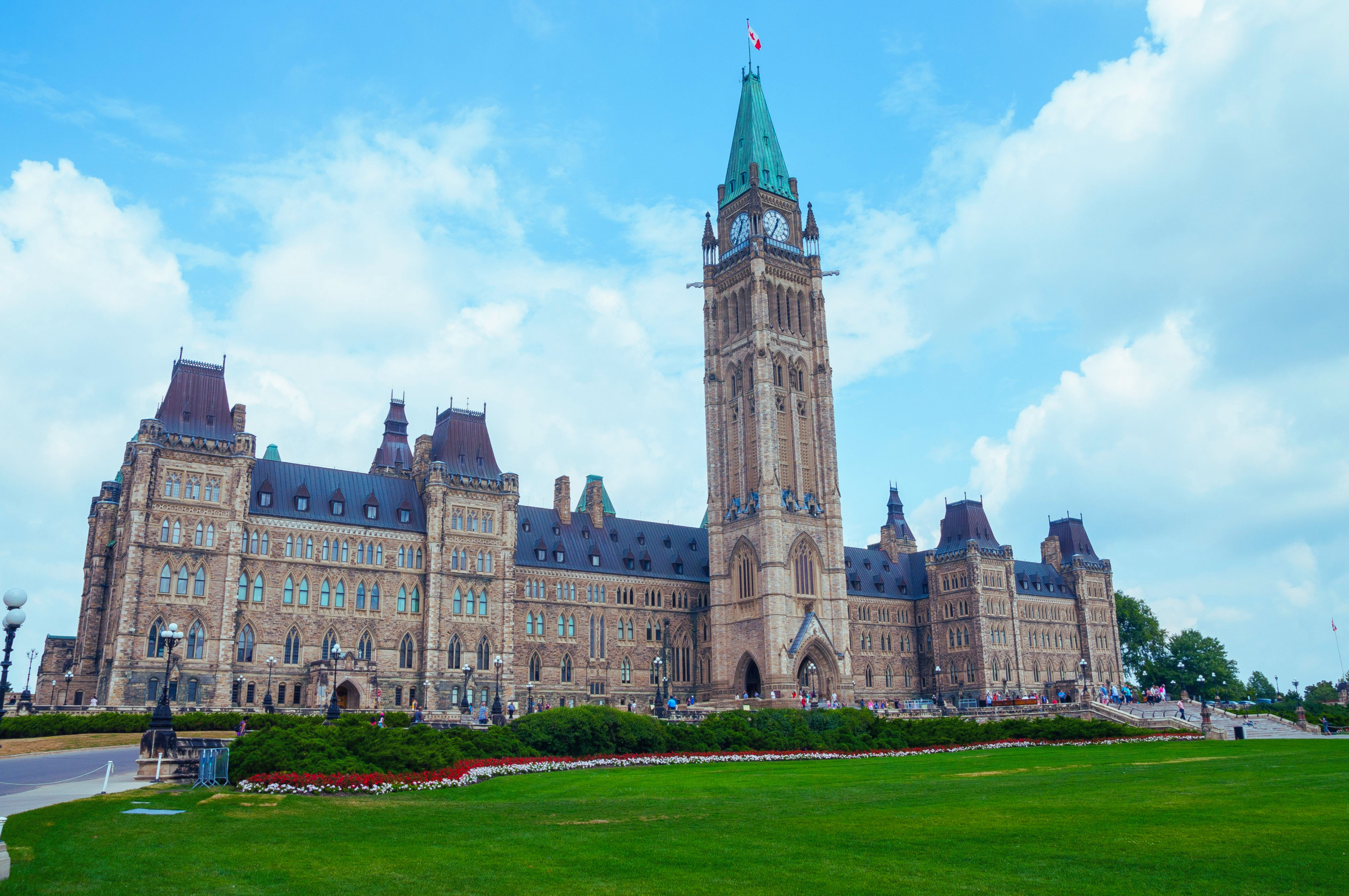
Ottawa occupies an unusual position in the Canadian consciousness — it’s the capital, which means most Canadians feel vaguely obligated to visit it at some point, and most of them are then surprised to discover how good it actually is. More relaxed than Toronto, more bilingual than anywhere else in Ontario, and home to more world-class museums per capita than almost any city in the country, Ottawa rewards the visit that people approach with mild skepticism and leave wanting to come back.
2026 is a particularly good year to visit. Ottawa is celebrating 200 years since the founding of Bytown (the city’s original name), with a calendar of commemorative events running throughout the year.
Parliament Hill: More Than a Landmark
Parliament Hill is the obvious starting point — an architecturally striking Gothic Revival complex on a bluff overlooking the Ottawa River, with views across to Gatineau, Quebec. It’s also more accessible than most people realize: free guided tours run through the Centre Block (currently undergoing a major renovation), the Senate of Canada Building, and the surrounding grounds.
The Changing of the Guard ceremony runs daily at 10am during summer on the front lawn — a formal military ceremony in full dress uniform that’s one of the most photographed things in Ottawa. The Sound and Light Show on Parliament Hill runs summer evenings, projecting Canada’s history onto the building facades in a 30-minute show that’s genuinely moving.
Free yoga on Parliament Hill every Wednesday at noon in summer is a slightly unexpected bonus.
ByWard Market: The City’s Beating Heart
For nearly two centuries, farmers and craft merchants have taken to the ByWard Market to share the fruits of their labor. What was once a simple market has turned into an absolute hub of food, shopping and entertainment. Over 175 stands fill the actual market, while more than 600 businesses call the surrounding neighbourhood home.
The ByWard Market area is also Ottawa’s best neighbourhood for eating and drinking — dense with restaurants, craft coffee shops, and bars within a walkable few blocks. The beaver tail pastry stands that operate seasonally here have achieved something close to national icon status.
The Rideau Canal: Summer and Winter
The Rideau Canal is a UNESCO World Heritage Site. In the winter, it becomes the world’s longest outdoor skating rink. And in the summer, you can boat and paddle along the water.
In winter, the 7.8-kilometre Rideau Canal Skateway is one of the most memorable things you can do anywhere in Canada — skating from downtown Ottawa to Dow’s Lake along a frozen canal, with warming huts, Beavertail stands, and hot chocolate available along the route. It typically opens in January and closes in late February depending on ice conditions.
In summer, the canal is equally appealing — cycling along its banks, taking an electric canal cruise, or renting a canoe or kayak from Dow’s Lake Pavilion.
Canada’s Museums: A World-Class Collection
Ottawa is home to seven of Canada’s nine national museums — a concentration of cultural institutions that’s unmatched in any other Canadian city. Most are free or low cost:
Canadian Museum of History (Gatineau, across the river): The most visited museum in Canada, with the world’s largest collection of totem poles in the Grand Hall, showcasing the story, culture and beliefs of Canada’s Pacific First Nations in a beautiful setting overlooking the Ottawa River and Parliament Hill. Worth a full half-day.
National Gallery of Canada: Nearly 40,000 works spanning Inuit sculpture to contemporary art, in a building distinguished by a 30-foot spider sculpture on the exterior. The Group of Seven collection here is among the best in the country.
Canadian War Museum: One of the best war museums in the world — a powerful, well-curated collection presented with genuine thoughtfulness about Canada’s military history.
Diefenbunker — Canada’s Cold War Museum: Four storeys beneath the city, the Diefenbunker is a fascinating time capsule of what life was like at the height of the Cold War, built as a safe space for Canada’s government in the event of a nuclear attack. One of the most unusual and memorable museum experiences in the country.
Canadian Museum of Nature: Fossils, mammals, minerals, birds, and Arctic ecology in a beautifully restored heritage building minutes from Parliament Hill.
Rideau Hall
The Governor General of Canada’s official residence is set in an idyllic 79-acre urban oasis located only a few minutes from downtown. Rideau Hall offers free tours through the state rooms where international dignitaries are welcomed and through art-laden hallways showcasing some of the country’s most prominent creators.
The Ottawa Food Scene
Ottawa’s culinary community has grown significantly in recent years. The ByWard Market area anchors the city’s dining scene, with the range of restaurants expanding considerably into neighbourhoods like Westboro, Hintonburg, and The Glebe.
For a memorable view with your meal: the Andaz Ottawa ByWard Market rooftop bar offers panoramic views of the ByWard Market neighbourhood and the Gatineau Hills — have a drink on the rooftop bar of the Andaz Hotel to enjoy a view of Ottawa that includes the ByWard Market.
The Fairmont Château Laurier — described as Ottawa’s castle — sits directly on the Rideau Canal with La Terrasse patio restaurant overlooking the canal, river, and Parliament buildings. The afternoon tea at Zoë’s on the main floor has hosted royalty.
Getting There from Toronto and the GTA
Ottawa is approximately 4.5 hours from Toronto by car (Highway 401 East to Highway 416 North). VIA Rail runs direct trains between Union Station Toronto and Ottawa with multiple departures daily — journey time approximately 4 hours 15 minutes. Bus service via FlixBus and others is also available.
From Mississauga, plan on 4.5 to 5 hours by car depending on traffic through Toronto’s east end. The Trans-Canada route via Highway 7 through the Ottawa Valley is slower but considerably more scenic than the 401.
More Ontario guides: [Things to Do in Toronto →] · [Day Trips from Toronto →]