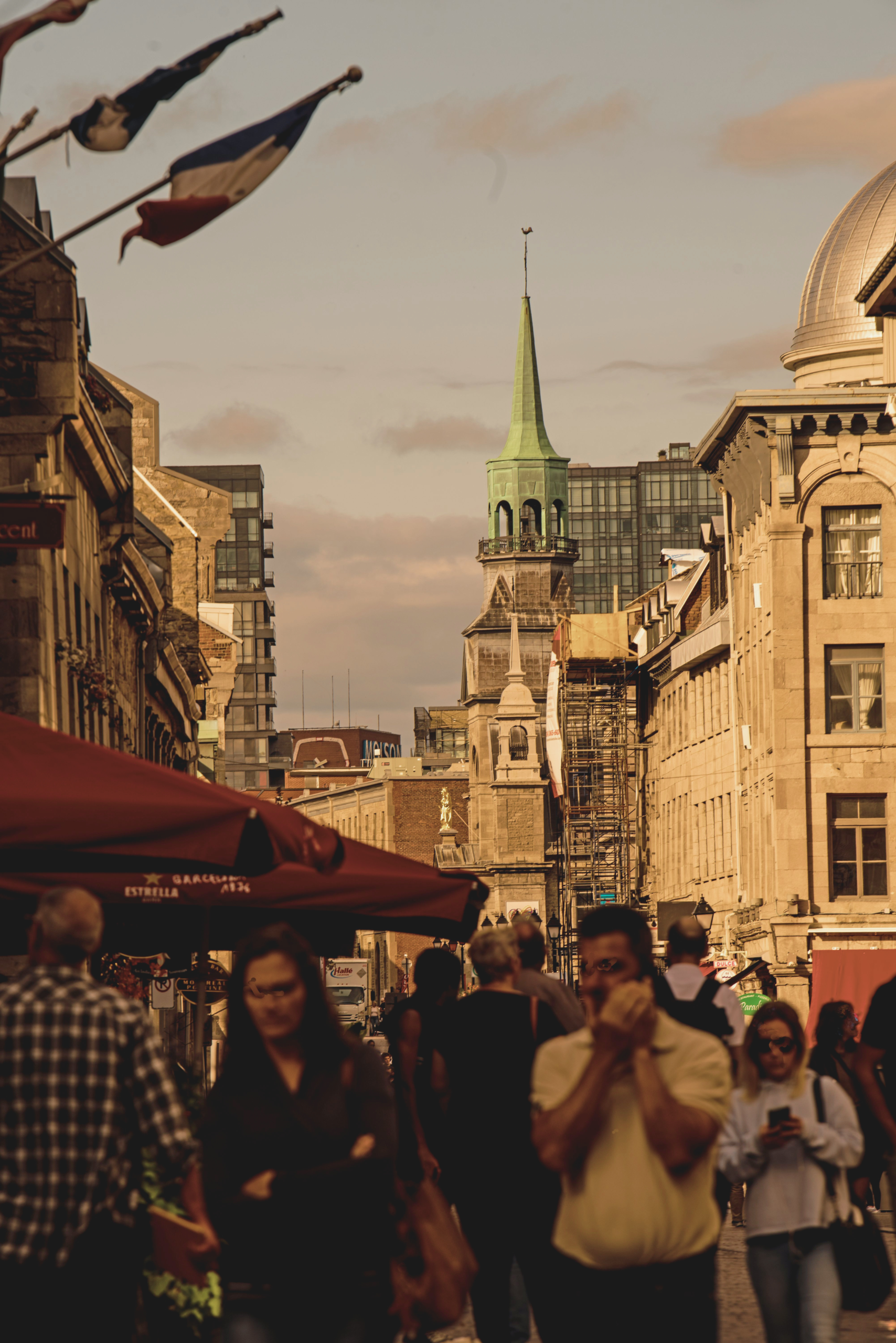
Montreal is not like other Canadian cities. It has its own language, its own cuisine, its own internal logic — a bilingual, stubbornly individual city built on an island in the St. Lawrence River, with a mountain in its middle and centuries of French and British history layered into its architecture. Of all the places in Canada that reward slowing down and eating your way through them, Montreal might be the best.
2026 marks the 150th anniversary of Mount Royal Park, so stay tuned for special commemorative events and official celebrations throughout the year. It’s also the year Montreal’s food scene continues its rise to global recognition — the city now appears regularly on international best-restaurants lists that would have seemed improbable a decade ago.
Old Montreal (Vieux-Montréal): Start Here
Old Montreal is the city’s historic core — a district of cobblestone streets and stone buildings dating back to 1642, centred on Notre-Dame Street and the Old Port along the St. Lawrence River. It’s the most obviously beautiful part of the city and the essential starting point for any first visit.
Notre-Dame Basilica is the architectural centrepiece — a stunning mid-1800s Gothic Revival interior with blue vaulted ceilings and gold detailing that ranks among the most impressive church interiors in North America. Evening light shows project onto the interior in a performance called AURA — book tickets in advance.
The Old Port along the waterfront has cycling paths, pedal boats, and the Montreal Science Centre, with the Bonsecours Market — a 19th-century domed building — providing the neighbourhood’s commercial anchor.
Mount Royal Park: The City’s Backyard
Mount Royal Park is Montréal’s most famous green space, designed by Frederick Law Olmsted (the landscape architect behind New York’s Central Park). This “mountain” offers the city’s most iconic skyline view.
The summit lookout — Kondiaronk Belvedere — is the best viewpoint in the city, particularly at sunset when the downtown skyline catches the late light. The walk up from Park Avenue takes about 30-40 minutes and passes through forest trails that feel genuinely removed from the city around them.
In winter, the mountain has cross-country skiing, snowshoeing, and outdoor skating on its linked ponds. In summer, free open-air live music, dance, and theatre performances run at Théâtre La Verdure.
The Plateau-Mont-Royal: Where Locals Live
Artsy and laid-back, Plateau-Mont-Royal captures the spirit of Montreal perhaps more than any other neighbourhood. Spiraling iron staircases crawl up Victorian-era residences on tree-lined streets, while magnificent street murals add colour to commercial thoroughfares.
This is where you wander without a plan, sit in a café on Mont-Royal Avenue for too long, buy bagels from St-Viateur Bagel Shop, and eat poutine at La Banquise (open 24 hours and serving over 30 creative variations from pulled pork and smoked meat to vegan options). It’s the neighbourhood that consistently gets described as “the real Montreal.”
Mile End: Bagels, Street Art, and Cafés
Right next door to the Plateau, Mile End has a laid-back, artistic feel and is famous for its bakeries, bagel shops, and multicultural food scene. The difference between a Montreal bagel and a New York bagel is real: boiled in honey water, baked in wood-fired ovens, denser and chewier, and eaten fresh. Fairmount Bagel and St-Viateur Bagel are both excellent and have been arguing about which is better since 1919.
Mile End’s café culture is the best in the city. Café Olimpico on St-Viateur has been pulling espresso shots since 1970 and remains the neighbourhood institution. Café Saint-Henri does the more contemporary pour-over and filter approach.
Jean-Talon Market: The Best Market in Canada
First opened in 1933, Jean-Talon Market (Marché Jean-Talon) is a local institution. Montrealers come to shop farm-fresh ingredients, from Quebec-reared pork and seafood from the country’s east coast to colourful vegetables — all artfully stacked in sellers’ stalls.
Located in Little Italy, the market is open every day of the week throughout the year. The best time to visit is in the summer, when vendors go beyond its central chalet and sell food straight from the soil or branch. The market’s cornerstone boutiques include fishmongers, butchers, cheese hawkers, and spices.
The Food: What Montreal Does Better Than Anywhere
Montreal’s food identity is built on a few iconic things done obsessively well:
Smoked meat: Schwartz’s Deli on St-Laurent is the most famous — a smoked meat sandwich on rye with mustard is the canonical Montreal lunch. The line moves quickly.
Poutine: Crispy fries, fresh cheese curds, brown gravy. La Banquise in Plateau Mont Royal serves over 30 creative variations and is open 24 hours.
Bagels: As above — Fairmount or St-Viateur, fresh and warm.
Fine dining: Montreal’s restaurant scene has reached international recognition, with chefs building menus around hyper-local Quebec ingredients — foraged from the province’s forests and shores. Au Pied de Cochon offers maple-forward dishes that represent the city’s most distinctly Quebec approach to fine dining.
The Festivals
Montreal’s festival calendar is the densest of any Canadian city. The International Jazz Festival (late June/early July) has free outdoor stages and is one of the largest jazz festivals in the world. Just for Laughs (July) is the world’s largest comedy festival. Osheaga (August) draws major international music acts to Parc Jean-Drapeau. MTLàTABLE runs October 29 to November 15, 2026 — a prix-fixe restaurant festival worth planning a trip around.
Practical Information
Getting there from Toronto: VIA Rail direct from Union Station takes approximately 5 hours. By car via Highway 401 East to Highway 20, approximately 5.5 hours. Bus via FlixBus and Megabus available.
Language: Montreal is predominantly French-speaking but English is widely spoken in all visitor-facing businesses, restaurants, and attractions throughout the city. Attempting basic French greetings is culturally appreciated — lead with bonjour, then switch when invited.
Getting around: The city is well-connected by the Montreal Metro, which travels between 68 stations. It’s also excellent for biking, with 560 miles of bike lanes. BIXI bike share is widely available.
More Quebec content: [Things to Do in Ottawa →] · [Browse Montreal listings →]