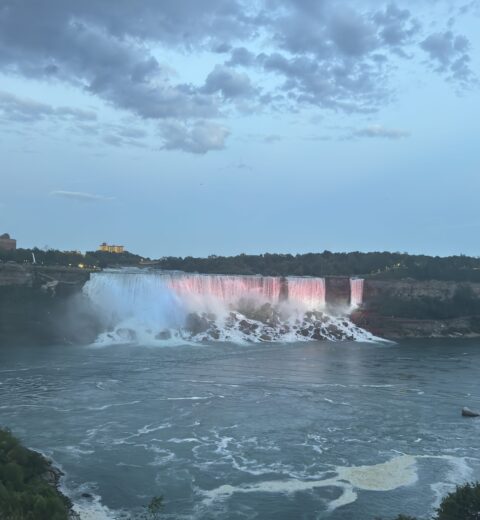
Twenty minutes north of Niagara Falls, the Niagara Peninsula produces some of the best wine in Canada — and arguably the best cool-climate wine in the country. The combination of the escarpment’s moderating influence, the lake effect from both Lake Ontario and Lake Erie, and a geological diversity that rivals parts of Burgundy has made this one of the genuinely exciting wine regions in North America. Niagara-on-the-Lake sits at the heart of it.
Most GTA visitors pair Niagara-on-the-Lake with a falls visit and drive home with a few bottles in the trunk. That’s a reasonable day trip. But the region rewards giving it more time — a dedicated wine country day, or better still, an overnight in the village itself.
How the Region Works
The Niagara wine region spans a larger appellation (Niagara Peninsula VQA) with several sub-appellations, but for visitors based in the GTA the practical geography is simple: most of the best-known wineries cluster along a 30-kilometre stretch of the Niagara Parkway and the parallel Lakeshore and Line roads, all reachable within 20 minutes of Niagara-on-the-Lake village.
A driver is essential — or hire a wine tour operator from the village if you want to taste properly at multiple wineries without worrying about the drive.
The Wineries Worth Visiting
Ravine Vineyard Estate Winery is the region’s most distinctive — a certified organic, biodynamic estate on a 27-acre property that includes a working farm, a beautiful restaurant, and wines that genuinely express where they come from. The Cabernet Franc and the Chardonnay are consistently among the best in the region. The restaurant alone justifies the stop.
Peller Estates Winery offers the most complete winery experience in the region — a grand château-style property with guided tours, tasting flights, an ice wine bar (maintained at -10°C inside), a highly regarded restaurant, and a range of programming that covers everything from dinner events to cooking classes. If you’re introducing someone to the Niagara wine experience, Peller is the most effortless choice.
Norman Hardie Winery is the serious wine person’s first stop — a small, estate-focused producer making some of the most celebrated cool-climate Pinot Noir and Chardonnay in Ontario. The tasting room is relaxed and the outdoor pizza oven on the property makes Saturday afternoons genuinely hard to leave.
Trius Winery at Hillebrand is one of the largest and longest-established wineries in the region, known particularly for its sparkling wine program (the Trius Brut and Brut Rosé are both excellent) and a large, well-run tasting room that handles groups easily.
Inniskillin Wines is where Ontario ice wine first earned its international reputation — the 1989 Vidal ice wine won the Grand Prix d’Honneur at Vinexpo in Bordeaux and put Niagara on the global wine map. Ice wine remains the signature here, and the tasting experience is worth doing if you’ve never tried it seriously.
Jackson-Triggs Niagara Estate has one of the most architecturally interesting winery buildings in the region — a striking timber structure designed by Toronto architects and a summer concert series on the adjacent amphitheatre that draws national touring acts.
Ice Wine: What It Is and Where to Try It
Ontario produces more ice wine than anywhere else in the world — a style that requires grapes to freeze naturally on the vine and be pressed while still frozen, concentrating sugars and acids into an intensely sweet, complex dessert wine. The technical challenge and yield loss make it expensive: a half-bottle (375ml) of good ice wine typically runs $40-70 CAD.
The most accessible varieties for first-timers are Vidal (fruity, lower acidity) and Riesling (higher acidity, more structured). Inniskillin, Peller, and Reif Estate all produce well-regarded examples. Most wineries keep ice wine in a cold room or icewine bar — ask specifically to try it rather than expecting it to appear in a standard tasting flight.
Niagara-on-the-Lake Village Itself
The village is walkable, charming, and genuinely historic — a Loyalist town established in 1792 that was briefly the capital of Upper Canada. Queen Street is the main strip with excellent restaurants, boutique shops, and the Shaw Festival Theatre.
The Shaw Festival runs April through October with a repertoire of plays from George Bernard Shaw and his contemporaries in a beautiful purpose-built theatre. Booking ahead is strongly recommended for weekend performances.
For dinner in the village: Treadwell Farm-to-Table Cuisine on Queen Street is consistently rated the best restaurant in NOTL — a seasonal menu built on local produce with a strong Niagara wine list. Reservations essential.
Best Time to Visit
Late September to early October is the peak of harvest season — grapes being picked, the region at its most atmospheric, and the possibility of watching harvest in action at estate wineries. This is also when Niagara’s fall foliage begins.
Late July through August has the best weather and the fullest festival calendar, but the region is busiest and accommodation books up.
November through February is ice wine season — the grapes freeze, the harvest happens (often at night in temperatures below -8°C), and tasting rooms operate more quietly.
Getting There
Niagara-on-the-Lake is 30 minutes from Niagara Falls city (north on the Niagara Parkway) and approximately 90 minutes from Mississauga on the QEW. The Niagara Parkway scenic drive between the falls and the village is itself worth doing — a tree-lined river road past historic sites and waterfront parks.
Also read: [Niagara Falls Complete Guide →] · [Day Trips from Toronto →]