Niagara Falls is one of those rare places that fully justifies its own hype. You’ve seen photos. You’ve seen videos. Neither prepares you for standing at the brink of the Canadian Horseshoe Falls and watching 2,800 cubic metres of water per second drop 57 metres — the sound alone is something else, a sustained roar that you feel more than hear.
It’s also, thankfully, entirely on your doorstep from the GTA. About 90 minutes on the QEW from Mississauga, Niagara Falls is the easiest major natural wonder in Canada to visit, and when you plan it right, it’s one of the most rewarding day trips you can take from anywhere in southern Ontario.
Horseshoe Falls: The Canadian Side
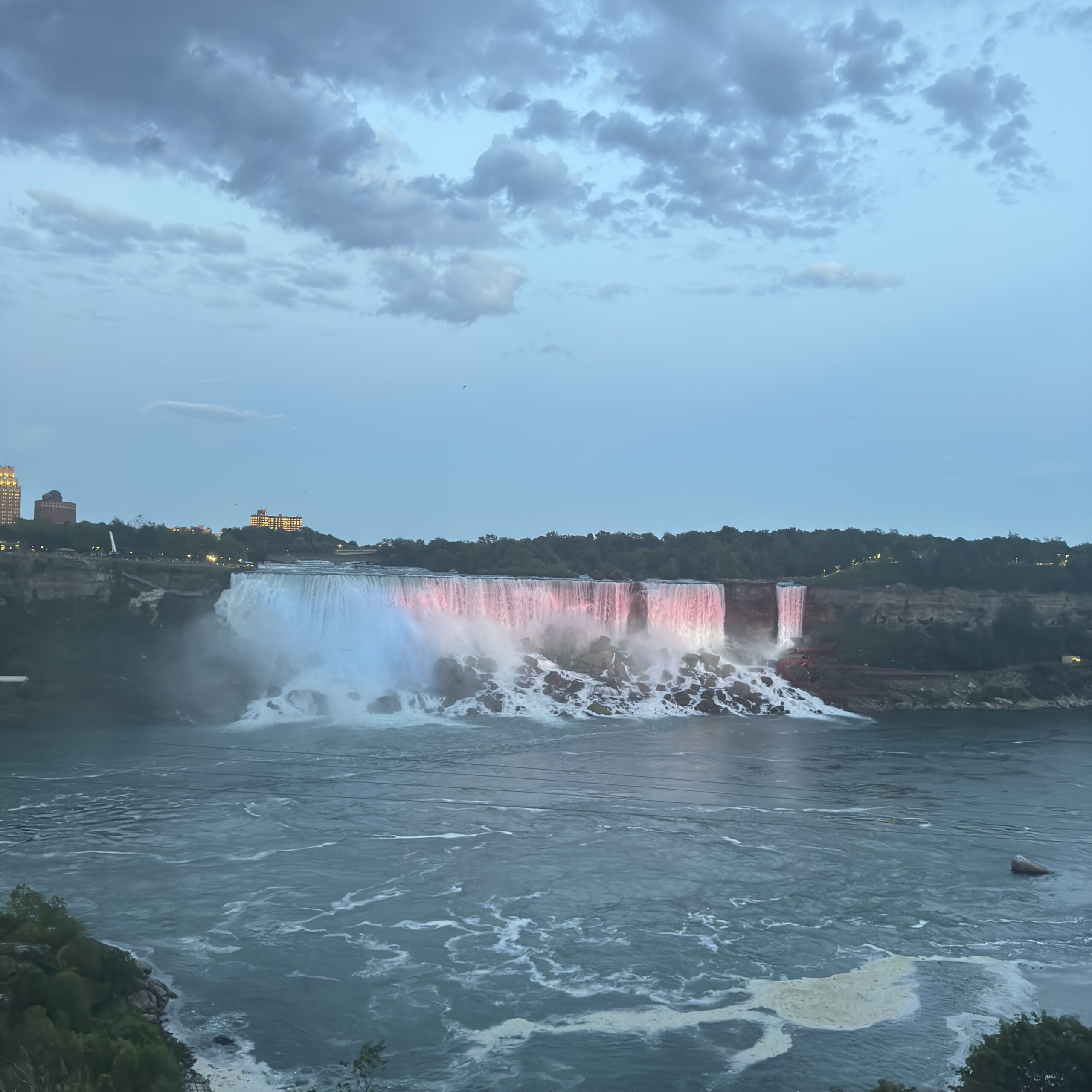
The Canadian Horseshoe Falls is the larger and more dramatic of the three falls that make up Niagara, and the Canadian side gives you the best view of it. Table Rock Welcome Centre puts you right at the brink — free to stand there, remarkable at any time of day, extraordinary at night when the illuminations start.
The Falls Illumination runs nightly from dusk until at least midnight (and later on weekends) — coloured lights project onto the falls in rotating sequences that change the character of the scene entirely. Watching Horseshoe Falls go from white to gold to blue on a clear evening is genuinely one of the best free spectacles anywhere in Ontario.
Journey Behind the Falls
Journey Behind the Falls descends 125 feet and takes you through 130-year-old tunnels through the bedrock, where you’ll feel the thunderous vibration of the Horseshoe Falls long before you see them. Observation portals cut through the rock offer a perspective on the falls that almost no one else gets — looking through the falling water from behind it.
The experience runs about 45 minutes including the descent, tunnel exploration, and lower observation deck. Book tickets online in advance — cheaper than walk-up pricing and you can select a timed entry. Located at the Table Rock Welcome Centre at 6635 Niagara Parkway.
Niagara City Cruises (Formerly Hornblower)
Getting on the water and approaching the base of Horseshoe Falls on a boat is the other non-negotiable experience. The Niagara City Cruises boat tour is Canada’s only falls boat tour — you’re given a red poncho (keep it) and the boat positions you close enough to the falls that getting wet is not optional.
Book in advance online, particularly in peak summer. The combination of Journey Behind the Falls plus the boat cruise is the classic two-part Niagara experience and together cover about three hours.
Clifton Hill: The Entertainment Strip
Clifton Hill is the main entertainment district in Niagara Falls, Ontario — a single street running from the Niagara Parkway uphill to Victoria Avenue, lined with attractions, museums, mini-golf courses, haunted houses, restaurants, and the Niagara SkyWheel. The street itself is free to walk and explore — the visual experience is one of the most photographed parts of Niagara Falls, with giant exterior props including Frankenstein heads, dinosaurs, and dragons mounted on facades.
For families: the Clifton Hill Fun Pass includes admission to the Niagara SkyWheel, Creepy Castle, Movieland Wax Museum, Dinosaur Golf or Wizards Golf, Ghost Blasters, and a choice of Toy Store 4D or Carnival Chaos ride. Buying individually costs more — if you plan to do several Clifton Hill attractions, the Fun Pass saves real money.
The Niagara SkyWheel — Canada’s largest observation Ferris wheel — gives you elevated views of the falls that justify the wait on busy summer days.
Niagara Parkway: The Scenic Drive
The Niagara Parkway running north from the falls along the Niagara River is one of the most underused aspects of a Niagara visit. The Whirlpool Aero Car, a cable car crossing the Niagara Gorge above the whirlpool rapids, provides a perspective on the river’s power that’s completely different from the falls themselves.
Further north, the Niagara Power Station (formerly Sir Adam Beck) has an interpretive experience about the extraordinary engineering involved in harnessing the falls for hydroelectric power. And at the northern end, Niagara-on-the-Lake awaits — more on that below.
Niagara-on-the-Lake: The Better Half of the Trip
After a tour of the falls, you can finish with a stroll through Niagara-on-the-Lake — 20 minutes north on the Parkway. This beautifully preserved Loyalist town is the part of the Niagara trip that most Toronto day-trippers miss entirely, and it’s consistently better than the falls area for lunch, wine, and a genuine sense of place.
Queen Street is the main drag — independent restaurants, boutique shops, and the elegant old hotels that make NOTL feel like an entirely different era. The surrounding wineries produce some of Ontario’s best VQA wines, particularly Pinot Noir, Chardonnay, and the region’s famous ice wine. Peller Estates, Ravine Vineyard, and Trius Winery are all worth stopping for a tasting.
The Shaw Festival Theatre runs April through October — Canada’s only theatre festival dedicated to plays written during the lifetime of George Bernard Shaw, in a beautiful theatre right in the village.
Practical Information
Getting there from Mississauga: QEW East toward Hamilton, continue to Niagara Falls — approximately 90 minutes in light traffic. Leave before 9am on summer weekends to avoid the Burlington Skyway backup.
Parking: Falls parking at Lot A (6635 Niagara Parkway) is closest to Table Rock. Expect to pay $25-35 for full-day parking in peak season.
Best time to visit: Weekdays in June or September have significantly shorter lines than July/August weekends. The falls themselves are at their most dramatic in spring when snowmelt increases flow volume.
From Toronto (no car): Multiple guided tour operators run full-day Niagara day trips from Toronto, typically including transportation, the boat cruise, and Journey Behind the Falls. Prices range from $75-$280 CAD depending on inclusions.
Frequently Asked Questions — Niagara Falls Ontario
How far is Niagara Falls from Toronto?
Niagara Falls is approximately 130 kilometres from downtown Toronto, about 90 minutes by car via the QEW. From Mississauga, the drive is slightly shorter — around 80 minutes in light traffic. Guided day tours from Toronto typically take about 2 hours including pickup, making it one of the most accessible major day trips from the GTA.
Is the Canadian side or American side better for visiting Niagara Falls?
The Canadian side is widely considered the better view — the Horseshoe Falls is most visible from the Canadian side at Table Rock, where you can stand right at the brink. The American side offers a different vantage point looking across at the Canadian falls, but the scale and proximity are less dramatic. Most international visitors base themselves on the Canadian side.
Do I need a passport to visit Niagara Falls from Toronto?
Canadian citizens do not need a passport to visit Niagara Falls, Ontario — it is entirely within Canada. If you plan to cross into Niagara Falls, New York on the American side, you will need a valid Canadian passport or NEXUS card to re-enter Canada.
How long should I spend at Niagara Falls?
A full day trip from Toronto comfortably covers Journey Behind the Falls (1.5 hours), the Niagara City Cruises boat tour (1.5 hours), and a walk along Clifton Hill, with time left for a stop in Niagara-on-the-Lake on the way back. Budget 8–10 hours total including drive time for a complete day trip from the GTA.
What is the Clifton Hill Fun Pass and is it worth it?
The Clifton Hill Fun Pass includes admission to six attractions: the Niagara SkyWheel, Creepy Castle, Movieland Wax Museum, Dinosaur Golf or Wizards Golf, Ghost Blasters, and a choice of Toy Store 4D or Carnival Chaos ride. Buying all six individually costs roughly $70–90 CAD — the Fun Pass saves significant money if you plan to use all six. If you only want two or three attractions, individual tickets are cheaper. The pass is valid for 365 days from purchase.
When is the best time to visit Niagara Falls?
June and September offer the best combination of good weather, smaller crowds, and lower hotel prices compared to peak July and August. The falls operate year-round — the illumination runs nightly and Journey Behind the Falls and Clifton Hill indoor attractions are open year-round. Winter visits are much quieter, with ice forming on the rocks creating a completely different visual.
Is Niagara Falls free to see?
Journey Behind the Falls is a ticketed Niagara Parks attraction located at the Table Rock Welcome Centre at 6635 Niagara Parkway. You descend 125 feet and walk through 130-year-old tunnels cut through the bedrock behind Horseshoe Falls. Observation portals give you a view through the falling water from behind it. The experience takes approximately 45 minutes. Tickets are available at the attraction or online in advance.
Can I do Niagara Falls and Niagara-on-the-Lake in one day?
Yes — this is the recommended approach for a GTA day trip. Visit the falls in the morning (Journey Behind the Falls and the boat cruise take about 3 hours together), then drive 20 minutes north on the Niagara Parkway to Niagara-on-the-Lake for lunch, a winery visit, and a walk along Queen Street in the afternoon. Leave by 4pm to avoid the worst of the Sunday return traffic on the QEW.
Are there wineries near Niagara Falls?
The Niagara wine region surrounds the Niagara Peninsula, with the most concentrated winery district near Niagara-on-the-Lake — 20 minutes north of the falls. Notable wineries include Peller Estates, Ravine Vineyard, Norman Hardie, Trius Winery, and Inniskillin (known for ice wine). Most offer tastings and tours. A dedicated wine country day trip is an alternative to the falls focus — or combine both in a full day.
More Ontario day trips: [Day Trips from Toronto →] · [Niagara-on-the-Lake Wineries Guide →] · [Browse Ontario listings →]